Tutorials

Ruby2JS: an extensible Ruby to modern JavaScript transpiler
Ruby2JS is for Ruby developers who want to produce JavaScript that looks hand-crafted, rather than machine generated. You can convert Ruby-like syntax and semantics as cleanly and “natively” as possible. This means that (most of the time) you’ll g...
Building optimistic UI in Rails (and learn custom elements) | Rails Designer
Custom elements are one of those web platform features that sound complicated but turn out to be surprisingly simple. If you have used Hotwire in Rails, you have already used them. Both and are custom elements. They are just HTML tags with JavaS...
Run Ruby applications in FIPS mode on Red Hat Enterprise Linux | Red Hat Developer
For a while now, I've been working to ensure that Ruby plays nicely with the OpenSSL FIPS module. My contribution to the upstream Ruby OpenSSL project for FIPS started when a FIPS-specific bug was identified in Ruby OpenSSL. I noticed its continuo...

How to Clean Up Your Rails Logs: Ignoring Benign SQL Warnings | Saeloun Blog
Explore how Rails enables fine-grained control over SQL warnings, allowing teams to suppress harmless database warnings while maintaining visibility into critical issues.Database warnings are a fact of life in production systems. They’re not error...

Speed Up Your Rails Testing Workflow with Local CI
Most developers and testers have been a part of this story before:
You work on your feature, commit new code, and push it to the repository.
You pick up the next task on your list and begin working on it.
Fifteen minutes later, you receive a noti...
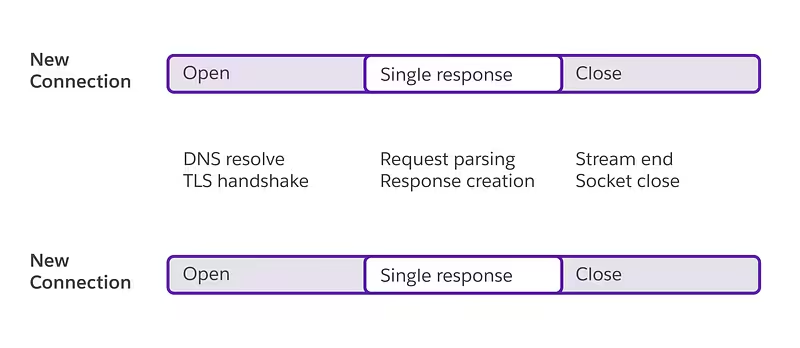
Persistent Connections (Keep-Alive) Dynos Explained | Heroku
Before the latest improvements to the Heroku Router, every connection between the router and your application dyno risked incurring the latency penalty of a TCP slow start. To understand why this is a performance bottleneck for modern web applicat...
Visit our quiz